


Yes, it’s time we had that conversation.
This won’t win me any favours, but it needs to be said.
When I look at what Michael Carrick has done so far, I struggle to see anything fundamentally different from what we saw under Ole Gunnar Solskjaer.
Style of football? Counter-attacking.
Formation? 4-2-3-1.
Good vibes? Absolutely.
Playing to the squad’s preferences? Without question.
Sound familiar?
And whenever people reflect on Ole’s tenure, they rarely mention that his right-hand man was Michael Carrick.
Reports at the time suggested Carrick and Kieran McKenna were heavily involved in the hands-on coaching, while Ole focused more on man-management. In other words, Carrick wasn’t just present — he was a key component.
Which raises the question: are we witnessing evolution… or simply a return?
And this goes beyond shape and style. Let me be clear, this isn’t an attack on Carrick. He’s done a good job and the results speak for themselves. The mood has improved and I even wrote about the positives.
But nothing about this feels revolutionary. It feels familiar.
And familiar can stabilise you.
However, that doesn’t always mean it takes you forward.
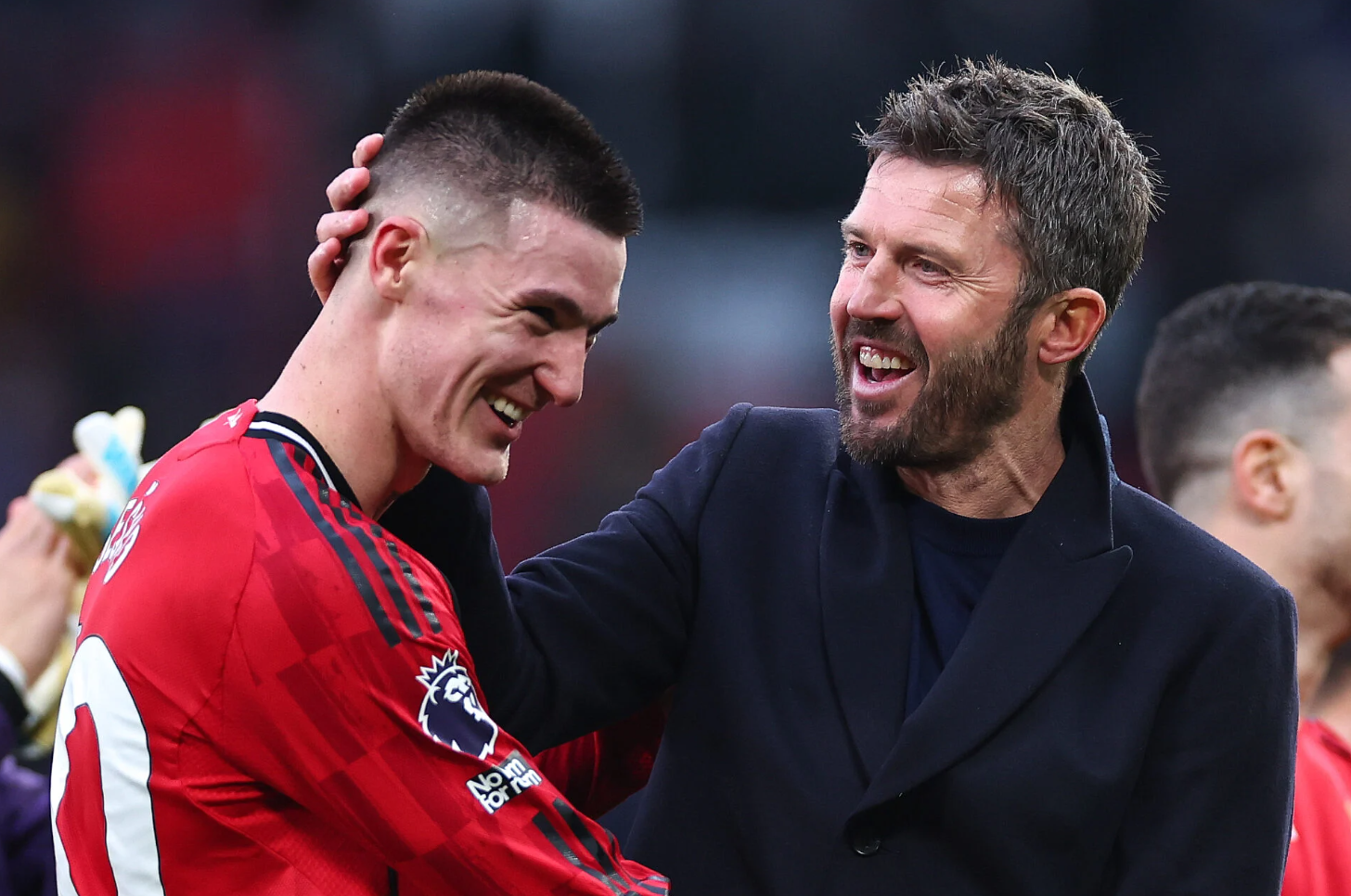
Right now, I agree that stabilisation was needed. Things weren’t disastrous under Ruben Amorim — he left us 6th, just three points off of 4th - and the foundations weren’t broken.
But Carrick has undeniably taken it a step further. The table reflects that. United are now the team that sit in 3rd, with a 6-point cushion to Chelsea in 6th. That’s tangible progress.
For me though, it’s the how.
Across seven matches, Carrick’s United have averaged roughly 50% possession, a number slightly inflated by playing ten-man Spurs for an hour, facing a struggling West Ham side, an average Everton and ten men once more for half an hour in the latest win over Palace. Against City, Arsenal and even Fulham, we had less of the ball. The approach was clearly pragmatic.
There’s nothing inherently wrong with that yet it does tell you something.
Many of our goals have come from transitions, set-pieces, or moments of individual brilliance. The Derby goals were counters after regaining possession. Arsenal’s equaliser came via a mistake before two outstanding strikes won it. Fulham saw a Casemiro header from a free-kick alongside two good passages of play that resulted in our win which still required a late winner to get us the 3 points. The goals against Spurs came from a clever corner routine and a sharp open-play move.
Efficient? Yes.
Dominant? Not quite.
Then came West Ham.
No red card advantage. No chaotic derby atmosphere. No elite opponent to psychologically lift the players. Just a compact side, comfortable without the ball, waiting for mistakes.
And we struggled.
Limited to just 4 shots on target, United only scored the one goal while containing predictable patterns causing us to find it difficult to break down a low block. It felt like something we've seen before.
That’s why this fixture always worried me more than the so-called bigger games. Not because of their quality, but because of their style. Historically, United have struggled against teams that sit in and counter — essentially mirroring our own approach.
When that happened again, it didn’t feel like a one-off. It felt cyclical.
Even looking at the wins over Everton and Palace.
A sweeping counter-attack at the Hill Dickinson Stadium gave us another 3 points. And an outstanding Bruno Fernandes performance against Palace ensured us Carrick's sixth victory in seven matches.
And that’s where the concern creeps in.
Have we genuinely evolved? Or have we simply returned to a version of ourselves that works until it doesn’t?
The two-week break between West Ham and Everton was a time for Carrick to reflect, adjust, and prove that this draw was just a one-off because if it’s only stabilisation — if there’s no layer beyond it — then we may be heading back into a pattern we’ve seen previously.
I also believe giving the players what they want can quietly become a form of player power — even if it doesn’t look obvious.
So why did it fail under Ruben Amorim?
Was he a bad coach? I don’t think so.
Was his 3-4-3 doomed in the Premier League? That doesn’t hold up either. Managers like Thomas Tuchel, Antonio Conte and Oliver Glasner have all shown it can work.
So what was it?
For me, it was the tools.
Amorim walked into a squad built for something else. His system requires technical security, positional discipline and players comfortable receiving under pressure. That’s not what this group has consistently shown. In fact, they're more the opposite!
And the club didn’t reshape the squad to fit his ideas.
Instead, he tried to impose a demanding structure onto players who either couldn’t execute it — or weren’t suited to it.
And the results suffered.
Now Carrick arrives and has done a complete 180.
He reverts to what the squad knows:
- 4-2-3-1
- Compact shape
- Transitions
- Clear roles
- Familiar patterns
And suddenly, this team looks like a team again.
That’s not a coincidence.
This is where the uncomfortable question emerges: are we watching managerial brilliance — or are we watching a squad being put back into its comfort zone?
Because if every new coach with strong ideas struggles, and every “simplify it” approach brings short-term success, then maybe the common denominator isn’t the manager.
It’s the profile of the players.
This isn’t about blaming them. It’s about ceilings.
If United want to dominate, truly dominate, then at some point the squad has to evolve. Otherwise we repeat the same cycle:
New manager -> new ideas -> initial resistance -> shite results -> players downing tools -> sack -> start over.
Carrick hasn’t broken the cycle yet.
He’s stabilised it.
And stabilisation can look like progress — until the ceiling appears again.
As the squad begins to look like a team once more and one capable of achieving Champions League football, the big question looms:
Will the club repeat itself and turn an interim into the permanent manager?
There’s genuine division around this. Fans are split. Pundits are cautious. Even Carrick himself has said he doesn’t want a rushed decision made about his future.
Right now, he feels like the right choice.
And if we’re honest, the club may have got slightly lucky. Carrick was likely viewed as a safe pair of hands — someone to steady things — not necessarily someone to flip the top-four race on its head.
That part is credit to him as he's done that in-spite of the owners, not because of them.
They didn't even didn’t back him in January. There was no clear long-term investment. This wasn’t a grand vision — it was a stabilisation appointment.
Yet results have shifted the narrative and the pressure on the board has eased. The decision to move on from Amorim suddenly looks more justified in the short-term.
But we’ve seen this film before.
Jose Mourinho left under tension. Solskjær then took over, lifted the mood, won games, brought unity, and was rewarded with the permanent role. For a while, it worked.
Then the ceiling appeared.
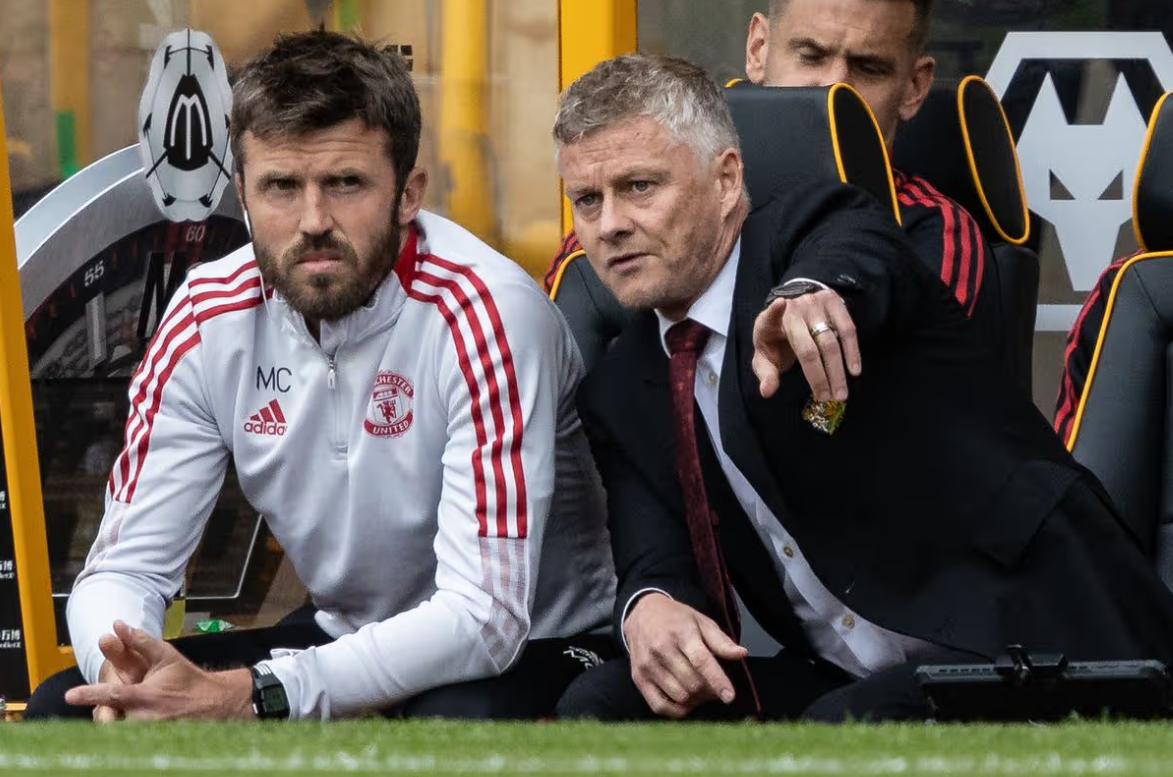
That doesn’t mean Carrick will follow the same path but it does mean the club must ask itself a harder question:
Is this momentum or is it a long-term blueprint?
Because giving Carrick the job permanently wouldn’t just be about what he’s done in five matches. It would be about whether he has the experience, the authority and the long-term vision to build something sustainable.
Especially now, with some elite names no longer available on the market, the temptation to stay internal grows stronger.
But Manchester United shouldn’t appoint out of convenience.
They should appoint out of conviction.
Carrick may yet prove he deserves it but the real question is whether the club is brave enough to distinguish between short-term revival and long-term evolution.
Do you trust this cycle to end differently this time?
We’ve been here before.
An interim comes in. The mood lifts. The results improve. The fans reconnect. Top four becomes possible. And suddenly the conversation shifts from “steady the ship” to “give him the job.”
Michael Carrick has done brilliantly so far — no one can deny that. But seven games is not a philosophy, momentum is not a long-term vision, and short-term comfort has fooled this club before.
If he gets Champions League football, the pressure to make it permanent will be overwhelming. It will feel right. It will feel deserved.
But feeling right and being right are two very different things.
The question isn’t whether Carrick can stabilise Manchester United.
The question is whether we’re brave enough to break the cycle.
Michael Carrick | Image via Manchester United official X (@ManUtd)