


Five games. Four wins. One draw.
Carrick has turned things around to the point where we actually want to watch United again and feel confident going into games.
In a short space of time, he’s shown that sometimes it’s not about reinventing everything. It’s about doing what needs to be done to get United back on track and qualifying for the Champions League.
1. Keeping It Simple
This is something I like — and I think most fans do too.
Carrick has found a team, a system and a style that works for this squad, and he’s stuck to it.
Five games in and he's picked virtually the same XI. The only real change was Dorgu out for Cunha which was due to injury, not tactical tinkering. There’s been no overthinking. No constant reshuffling.
Players are in their best positions. Bruno as a No.10 has reminded everyone why that’s his role. Yes, he still produced numbers before playing in that deeper position but in five games under Carrick, further forward, he looks like himself again.
Mainoo simply starting matters. We all knew the talent was there. Amorim ignoring him never made sense. Under Carrick, he’s trusted — and he’s responded.
Even the substitutions feel logical. Chasing a game? Add an attacker. Winning comfortably? Straight swaps to protect legs and give minutes. No five-at-the-back crap when we need a goal. No defender-for-attacker nonsense.
There is risk in this approach. It’s largely defend and counter which is not the long-term vision most fans want, however, if United are to truly progress, the style will have to evolve.
But right now, with Champions League qualification the priority, simplicity has stabilised everything.
Sometimes default settings are exactly what you need.
2. Simplicity Breeds Confidence
Playing to the players’ strengths has done more than stabilise results — it’s given them belief.
Mainoo feels trusted again, and it shows. Bruno at CAM? He's flourishing and showing everyone why he’s world-class in that role. When players know the manager has faith in them, they stop second-guessing and start performing.

That trust has sparked more than individual form. The squad’s energy and intensity have lifted. The camaraderie in the squad also feels different, almost like they're more United. That felt absent under Amorim.
From pressing to movement to connecting in attack, we’re seeing a team that feels like a team.
Confidence isn’t just about skill. It’s about certainty — knowing your role, your support, and that the manager is backing you. And right now, United are thriving because that clarity is translating into performances.
3. Understanding What’s Required
Carrick has shown that he’s not just managing a team — he’s managing Manchester United. Having been a player and interim at the club, he understands the culture, the traditions, and the expectations in a way most managers don’t. That knowledge shows in subtle but important ways.
We see it in his consistency with lineups, the logical substitutions he makes, and the care he shows in trusting youth like Mainoo. He’s not just picking players, he’s creating the conditions for them to thrive. That includes knowing when to rest legs, when to push the team forward, and when to make changes that feel natural rather than reactionary.
He’s also in tune with the squad’s psychology. Carrick understands what each player needs to play at their best whether it’s confidence, space, clarity, or responsibility. That awareness translates directly to performances on the pitch.
And it extends to the fans. Carrick has a feel for what supporters expect: clarity, logic, and a team that plays to its strengths. The alignment between what the fans anticipate and what actually happens on matchday is something we haven’t consistently seen under previous managers. It’s subtle, but it changes the atmosphere around the club, the way players carry themselves, and ultimately the results.
Understanding what’s required isn’t flashy. It’s not about tactical fireworks. It’s about reading the club, the players, and the moment — and responding correctly. That’s where Carrick’s experience and connection really stand out.
4. Brought Belief Back
I don’t think any of us felt as optimistic about this season under Amorim as we do now under Carrick. And that shift has happened fast.
It’s not just about results. It’s about how those results feel.
There’s a calmness around the team again. When we go behind, we don’t immediately panic. When games are level late on, you actually believe we’ll find something. That emotional swing — from dread to expectation — is massive.
Champions League football now feels achievable rather than hopeful. Before, it felt like we were clinging to possibility. Now, it feels like we’re building toward it.
And as fans, that changes everything. We look forward to games again. There’s anticipation instead of anxiety. You trust that the manager will make logical decisions. You trust that the players believe in what they’re doing. That trust filters through the entire club.
It’s still early, and setbacks like West Ham, will come. But even with that in mind, there’s a resilience that feels stronger than before. A sense that if we stumble, we respond.
Belief isn’t about hype. It’s about conviction.
And right now, Carrick has restored that.
5. Not Much Has Actually Changed
This is the uncomfortable part.
For all the positivity, it’s been difficult to pinpoint something fundamentally new.
Yes, there are tweaks — different corner routines, a more fluid front line, better in-game management. But zoom out, and this looks very familiar: counter-attacking, compact shape, interchangeable attackers, good vibes. We’ve seen this before — under Ole Gunnar Solskjaer, with Carrick as his assistant.
That’s not necessarily a criticism. It worked then. It’s working now.
But is it progression? Or is it regression to comfort?
There’s a sense that Carrick is leaning into what these players like. The formation suits them. The style suits them. Reports of reduced training intensity? That probably suits them too.
Low key, it does raise the question of player power.
When Amorim arrived with a more demanding structure, the squad looked exposed. His system required technical precision and tactical discipline. It failed — and the club didn’t fully back him. Carrick has come in and simplified things, and suddenly the mood and results improve.
So is this evolution? Or is this the players reverting to a system that protects them?
The West Ham draw was telling. No red cards. No chaotic atmosphere. No big-game adrenaline. Just a difficult opponent we’ve historically struggled against — and we dropped points. That felt familiar too.
The two-week break may actually help. It gives Carrick time to reflect and adjust.
Because if nothing truly changes beneath the surface, we might just be reliving a cycle rather than building something sustainable.
And that’s the real question.
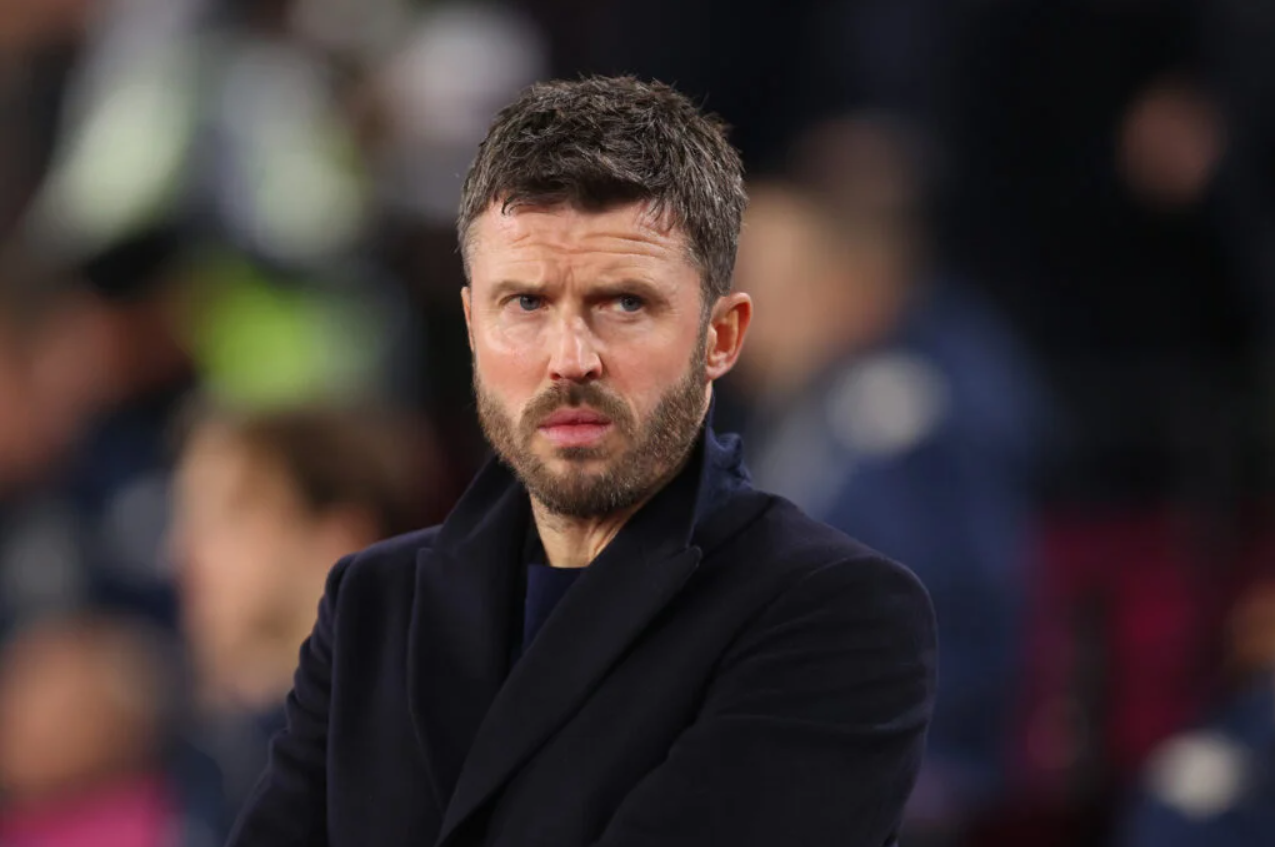
Michael Carrick has gone five games unbeaten in his second interim spell at Man Utd | Michael Carrick: Image via Manchester United official X (@ManUtd)