


I'm still frustrated over last night's draw. It felt like a missed opportunity to strengthen our grip on the top 4. An 8-point gap to Loserpool in 6th sounds a hell of a lot better than 6 points or dare I say it, 3 should they beat Sunderland tonight 😬.
But it never quite feels comfortable at West Ham.
Not losing is a positive, of course. Yet the winless run there now stretches to four games, and performances like that don’t exactly quiet down the nerves that perhaps this team has turned things around.
What struck me most wasn’t just the dropped points. It was how we tried to solve the problem of breaking down a low block.
For all the frustration, one pattern kept repeating itself. When we looked most dangerous, it wasn’t through intricate combinations or patient central build-up play.
It was when we got the ball wide and put it into the box.
That’s not desperation.
That might just be United’s most underrated weapon.
Let’s take last night as the clearest example.
United had four big opportunities: Shaw’s effort blocked on the line from another sharp corner routine, Casemiro’s offside header, Zirkzee’s header drifting wide, and Sesko’s goal.
All from crosses.
Yes, Shaw’s chance came from a corner — we’ll come to set-pieces — but the pattern is obvious. When United deliver early from wide areas, we look dangerous.
What made the draw frustrating was not a lack of access to the flanks. We reached wide areas repeatedly however, the issue was hesitation. Slowing it down. Playing it sideways or backwards. Recycling possession instead of committing to the delivery.
There seems to be a reluctance when there isn’t an obvious aerial focal point in the box. But the numbers suggest that that shouldn’t matter.
United have scored 47 league goals this season — joint third — already 3 more than the entirety of last campaign, with 12 games still to play.
Of those 47, 11 have come directly from open-play crosses into the box. A further 8 have come from set-pieces, excluding penalties.
That means 19 of our 47 goals (40.4%) originate from balls put into the 18-yard area.
And these aren’t solely headed finishes from towering centre-backs. Amad, Mount, Mbeumo — players not defined by aerial dominance — have benefited too. It’s not just about winning the first contact. It’s about what chaos a delivery creates.
That’s the key.
When the ball goes into the box, something happens.
If nearly 40% of United’s goals originate from deliveries into the box, that isn’t coincidence. It’s structure.
And structure doesn’t appear overnight.
For all the criticism that surrounded Ruben Amorim’s tenure — a lot of it justified — the foundations of this attacking output were laid under him.
United didn’t suddenly become one of the league’s most productive sides in the final third by accident. Throughout the season, the numbers have consistently placed us near the top for chances created, shots taken and goals scored. Even when performances felt inconsistent, there was always a sense that this team could score.
That is not nothing.
One of the clearest examples is set-pieces. For years, they were an afterthought. Under Amorim, they became a genuine route to goal. United now average 8 goals per 100 set-pieces which is higher than Arsenal’s 7.3 [via The Athletic after Man Utd's win over Fulham on February 1st] a statistic that would have been unthinkable not long ago.
The improvement in wide delivery and box presence sits in that same category. It is coached. It is rehearsed. It is intentional.
Darren Fletcher then continued building on this foundation, but added his own twist. One key change was using Dorgu as a left-winger — a role Amorim had also employed effectively in the win over Newcastle. Since moving into that position, Dorgu arguably became one of our most dangerous players, highlighted by his goal at Arsenal, a moment that showed the impact of committing wide players fully into attacking positions.
Even against Burnley, one of the crosses that led to a goal came from Dorgu on the left. By using him wide, the team could stretch opposition defenses, create space in the middle, and target players arriving in the box. It was simple, effective, and repeatable.
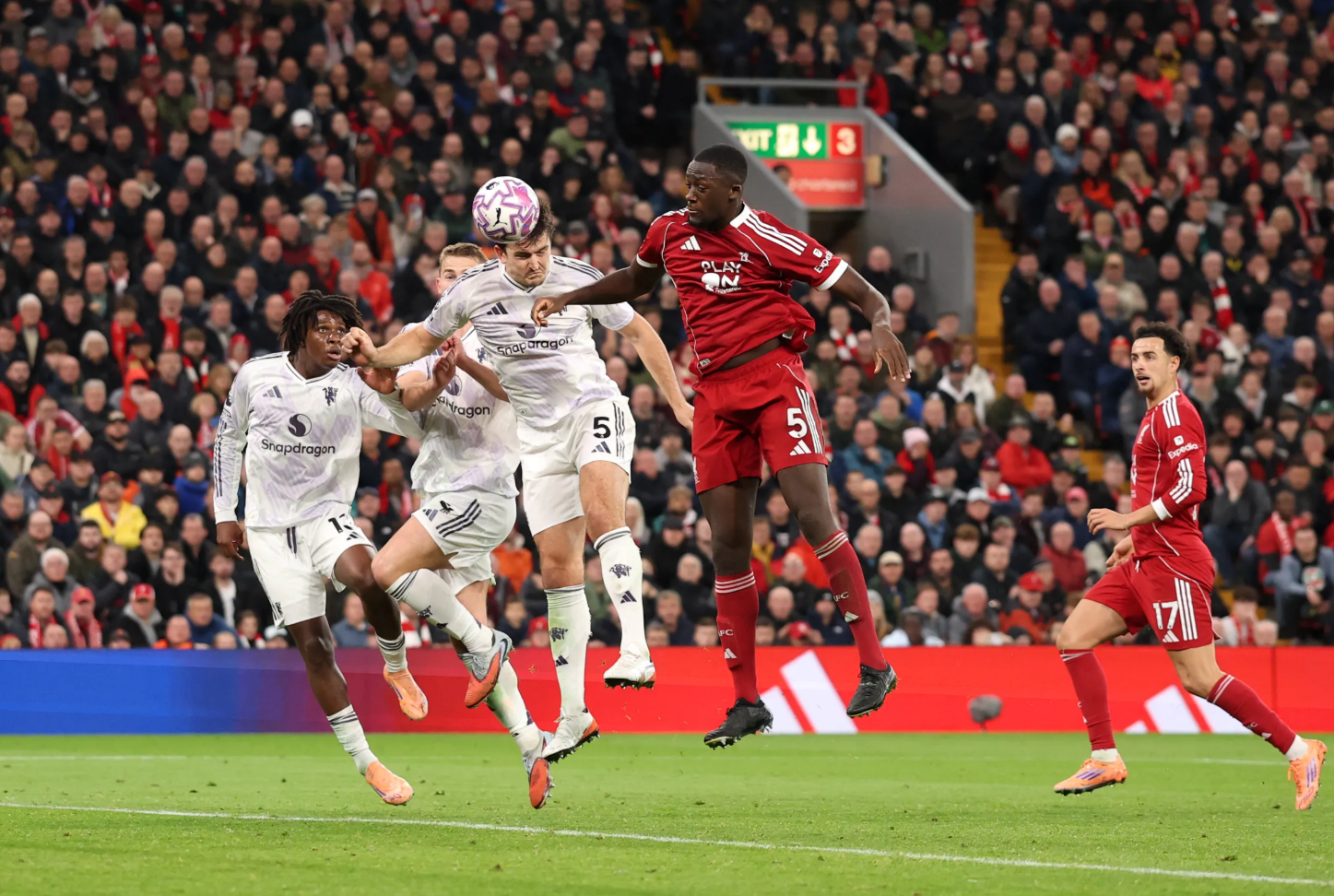
When Carrick took over, he continued this approach, refining it further. The formation changes under his management have allowed wide players like Dorgu, Cunha, Mbeumo, and Amad to play in their natural positions, rather than as hybrid wing-backs or inverted wingers. As a result, these players understand their roles better, run more purposeful lines, and consistently deliver dangerous balls into the box.
In other words, the framework built by Amorim and followed on by Fletcher didn’t vanish under Carrick — it evolved. And in watching these players operate out wide, you can see not just the tactical planning, but also how United’s attacking identity, grounded in width and delivery, is beginning to re-emerge.
This type of width-play has always been synonymous with United.
People debate what exactly makes up the “United DNA,” but for me, a big part of it was seeing the ball worked out wide and delivered into the box by players like Denis Irwin, Ryan Giggs, David Beckham, Gary Neville, Patrice Evra, Nani, Cristiano Ronaldo, Rafael, Antonio Valencia, and others.
This was how United overpowered stubborn defenses. By flooding the box and combining pinpoint delivery from wide players with the timing and movement of forwards like Andy Cole, Dwight Yorke, Ruud van Nistelrooy, Ole Gunnar Solskjaer, and countless others. The team created constant chaos and goal-scoring opportunities.
Now, we are beginning to see glimpses of that approach again. The structure is there, the wide players are more purposeful, and the box is being loaded at the right moments. There’s still plenty to improve, but for the first time in a while, United’s attacking play is starting to echo the patterns that made the club so deadly in its prime.
At the end of the day, last night wasn’t just a draw. It was a reminder of what United can do when we actually stick to what works.
From Amorim’s foundations to Fletcher’s tweaks, and now Carrick refining it, the wide players are finally getting into positions that make a difference. The crosses, the box presence, the chaos they create — it’s all part of the DNA that’s always made this club the attacking powerhouse we know them to be.
Sure, we’re not perfect yet. There’s still a lot to sharpen. But the signs are there. If we keep committing to this, staying confident and decisive out wide, then what we’ve glimpsed lately isn’t just flashes — it could be the blueprint for United at their best again.