


Manchester United will always be Manchester United. Regardless of results, ownership changes or performances on the pitch, the name carries weight. It is one of the most recognisable institutions in global sport. Say you manage Man United. It still means something.
For decades, that alone was enough.
But in modern football, reputation does not exist in isolation. When a club is as famous as this one, everything is visible: the dysfunction, the hierarchy, the uncertainty. And at present, the conversation around United feels more focused on boardrooms than performances.
That matters.
Because elite managers and players do not just assess history. They assess structure.
Recent situations such as the handling of Ruben Amorim's sacking to the public scrutiny around Sir Jim Ratcliffe and the prominence of figures like Jason Wilcox, raise an uncomfortable question:
Has poor structure begun to erode the power of the badge?
So, where is this even coming from?

United are hunting for a permanent manager. Big names were thrown around and high on the list was Thomas Tuchel — the former Chelsea and Bayern Munich manager. The thinking was simple: once the World Cup ends, Tuchel could be available again. A proven winner, still relatively young, still ambitious. It made sense.
Now? That door is shut as he’s extended his deal with England until 2028.
Another name was Carlo Ancelotti, a man synonymous with managing the elite. If you’re talking about stature, experience, a winner, calm authority. He ticks every box.
Like Tuchel, he’s currently in international football, leading Brazil, the most decorated national team in history. And while there was talk he could reassess after the World Cup, reports now suggest he could remain until 2030.
That’s two of our “dream options” gone. And it’s kinda scary when you think about it. England and Brazil are huge gigs, sure. But international football is basically a spa retreat compared to managing a club day in, day out: fewer games, less chaos, more time to sip espresso.
And yet they pick that over United. WTF does that say about us?!
This is not about history, nor about fanbase. Not even about global recognition.
It's about structure.
If City had called, you know what the answer would be. Tuchel wouldn’t have even looked at the World Cup trophy twice.
That’s not insecurity. That’s market reality.
And maybe that’s the point.
Perhaps managers aren’t looking at the squad and thinking it’s impossible. Maybe they’re looking above that. At ownership and hierarchy. At long-term direction.
Here’s the thing — this isn’t about history or badge alone. Everyone knows United is massive. But elite managers today don’t just chase names. They chase projects. Stability. Clarity. Structure. And right now let’s be honest, that’s not exactly our strongest suit.
Which brings me to the heart of it: has poor structure started to erode the power of the badge? Because if the best in the world are looking past us, maybe the badge isn’t enough anymore.
It’s not just managers facing this dilemma. Players are too.
Like any top club, United are on the hunt for signings — midfield, full-back, maybe a forward. But most of the talent linked to us are in their early-to-mid twenties. Their next move could define their careers. And let’s be real, would you risk screwing it up? Even if it is Man United?
But here’s the uncomfortable part — why wouldn’t players assess the situation the same way managers do?
Take Elliot Anderson. Midfielder. 23. On paper, ticks every box. But there’s competition: Man City. Yeah, the club we love to talk shit about. But guess what, they’re better than us in almost every way, and everyone knows it, including players and agents.
So the question becomes simple: is United the safest place for that prime to flourish right now?
If I were entering my prime, I’d go to City. More chance of trophies. More chance your career doesn’t flatline. Look at Antoine Semenyo, a prime example of someone choosing stability over history when he decided to opt for the Blue half over the Red. Back in the day, this would’ve been unthinkable. Now? Totally normal.
At the moment, it feels like United only really land players if:
- They’re boyhood fans,
- They publicly declare they only want United,
- Or there’s literally no competition.
Carlos Baleba almost signed for us last summer. He's still a target even after a massive drop off in form this season. Why? Because nobody else is in for him and United need midfielders.
Last summer, Matheus Cunha only wanted United. Bryan Mbeumo? Same story. That’s basically the current playbook.
There’s nothing wrong with signing boyhood fans. Passion matters.
But the best of the best don’t usually rely on sentiment to win transfer battles.
When the biggest talents consistently choose you over everyone else, that’s pull.
When you need the stars to align — that’s leverage slipping.
And if you’re regularly moving from first-choice targets to second or third options, the gap doesn’t close.
It widens.
The badge is still massive, the history is still huge, but pull isn’t automatic anymore. It’s conditional. And until United fixes structure, clarifies vision, and shows elite managers and players that the project isn’t chaos in disguise… well, let’s just say the hype alone isn’t enough.
All I’m saying is this: United will always have the pull. But whether we pull the right people, that’s the question.
Just like with players, we don’t want second-choice managers. They’re not the ones who will take us to the next level. And yet, the smart ones? They’re looking at this job and thinking, absolutely not, thanks ❌.
And that, it makes you feel shite, doesn’t it? Like you’re watching from the sidelines while the world wonders why anyone would risk it.
I don’t know if that feeling will ever change. I don’t know if we’ll get back to the days when the club didn’t even have to try — when it was automatic:
“Man Utd want me? Where do I sign?”
Will those days return? Maybe, if structure, clarity, and vision catch up with the weight of the badge. If we stop relying on history and start offering a project that even the biggest names can’t ignore, perhaps.
Until then, we just watch, we hope, and we argue over who should’ve come, who might, and who’s walking straight past Old Trafford without even looking.
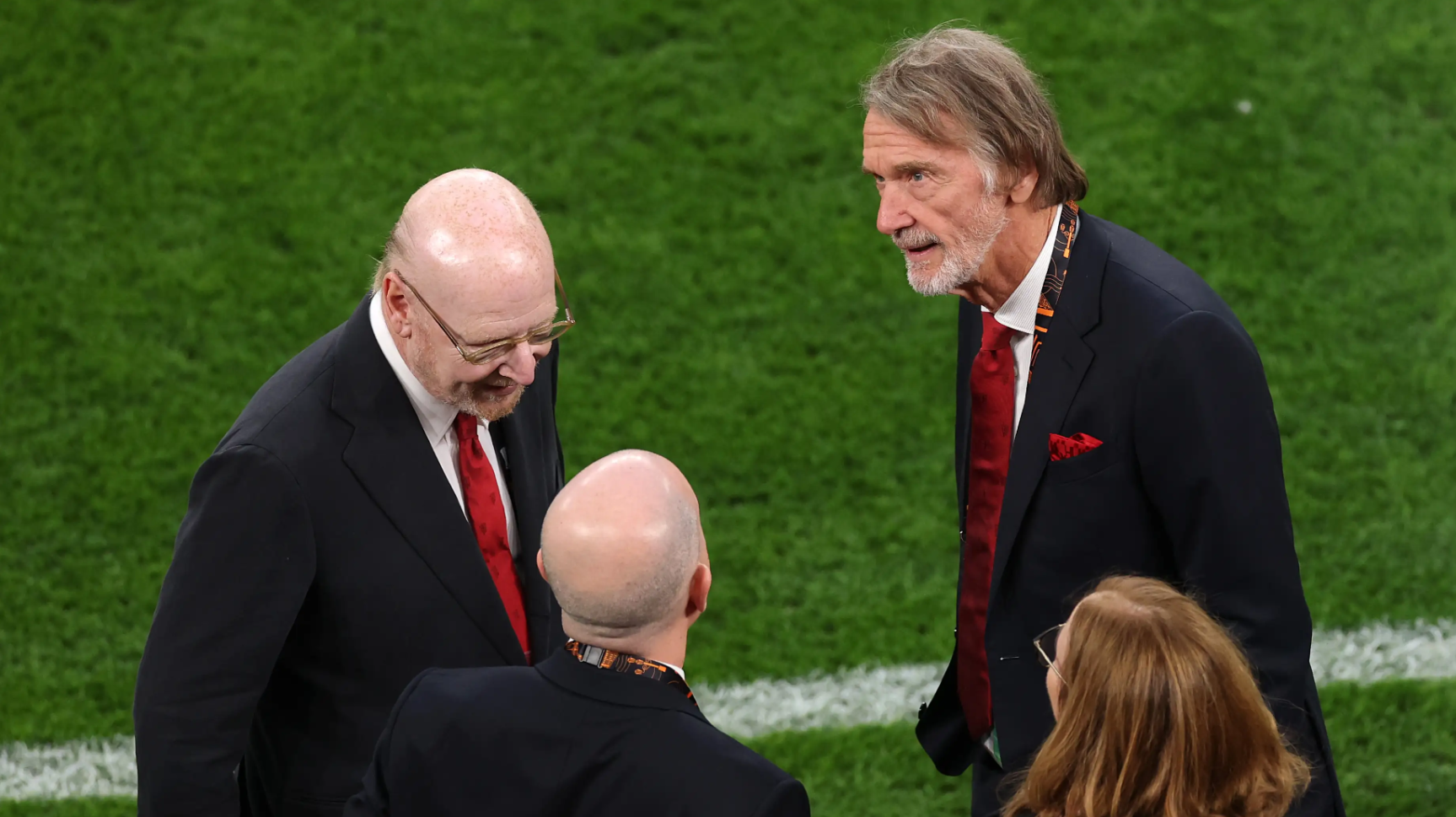
Avram Glazer and Sir Jim Ratcliffe | Creator: Michael Steele | Credit: Getty Images Copyright: 2025 Getty Images via Goal