


Just over a week ago, Bruno Fernandes spoke about what could convince him to stay at Old Trafford. His comments were seen by many as a message to the club, a subtle nudge toward ambition, investment, and a return to the top.
This is what the skipper had to say in an interview he did with The Times whilst United were out on holiday, I mean training (😅) in Ireland:
"And what I said to the club every time I spoke with them, what I want from the time I'm here, I just want to compete.
But what I always say to the club is you can't promise me I'm going to win the Premier League, that's impossible, but if you promise we're going to be competitive -- that's all I need to know.
Then it's on me to become the best version of myself, to help everyone around to become the best version of themselves, to then become the club we want to be."
When he said United simply need to be “competitive”, it raised a more uncomfortable question.
What does “competitive” actually mean at Manchester United today?
The answer to that question tells you everything about where the club is, and perhaps more importantly, where it thinks it is.
Since Bruno arrived in 2020, there have been enough moments to suggest progress. On paper, there are signs of a team that has been in and around the conversation. A 2nd-place finish. Domestic trophies. European finals.
At a glance, it looks like a side that has been competing.
But football is rarely that simple, and context matters.
That 2nd-place finish in 20/21, often held up as evidence of progress, came without a genuine title race. United finished 12 points behind Man City. It was, in many ways, a comfortable second place. Respectable, yes. Competitive, not quite.
The cup wins tell a similar story. The Carabao Cup and FA Cup victories brought moments of genuine quality and deserved celebration, but, in particular with that FA Cup triumph it brought a season where league performance fell short. United ended with an 8th-place finish which did not represent a step forward so much as it masked how far the team had slipped over the course of the season.
That is the key distinction. Moments of success are not the same as sustained competitiveness.
In Europe, the gap becomes even clearer.
Twice knocked out in the group stage of the Champions League. Not narrowly, not with misfortune, but convincingly. The most recent campaign ended bottom of the group, a first in the club’s history. That is not a near miss. That is a clear indication of a team operating below the required level.
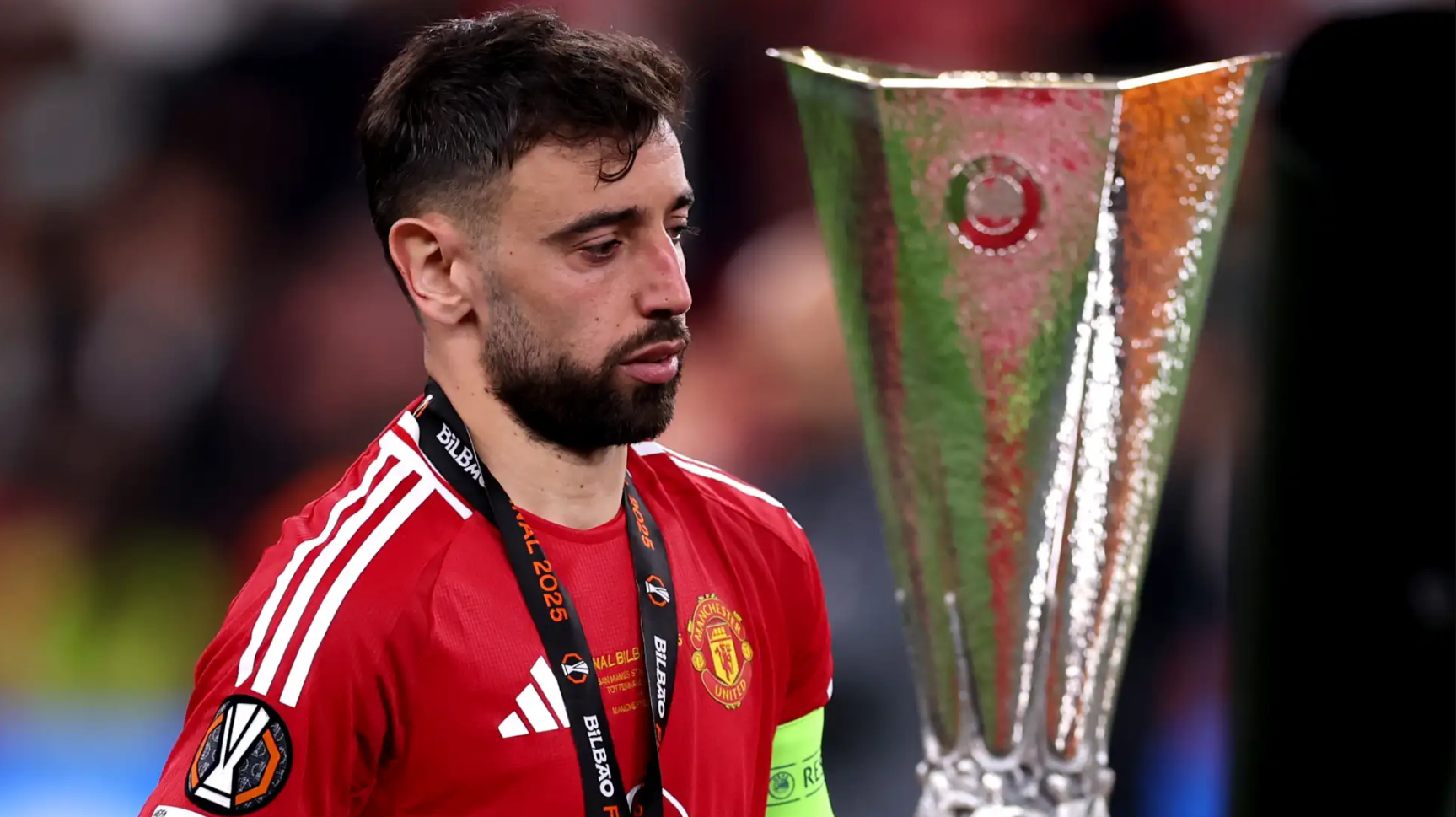
Then there are the Europa League finals. Two opportunities to claim a major European trophy and establish some level of continental credibility. One on penalties to Villarreal, and the other to Spurs, which, frankly, raises more questions than answers.
Like how tf we losing a European final to Spurs?! That's perhaps the most humiliating thing I've ever witnessed as a United fan!
Lose a final, it happens. Lose it in a way that feels avoidable, against opposition you would expect to match at the very least, and it tells you something deeper about the team.
Across all competitions, the pattern is consistent. United have been present, but rarely convincing. Involved, but not authoritative. Close enough to be mentioned, but not close enough to win.
And then came the seasons that removed even that illusion.
A 15th-place finish last year. The lowest points tally in the club’s Premier League history. No trophies. No European football. Not even a place in one of three European competitions. At that stage, it is no longer a dip. It is a collapse.
What followed did little to suggest a recovery.
With no European football this campaign, the schedule was lighter. Fewer matches, more time on the training ground, more opportunity to build structure and consistency. Instead, United exited both domestic cups at the earliest stages and will end up playing just 40 matches across the season. That is the fewest the club has played in over a century.
Over 100 years.
This last happened during WWI.
That's not just an anomaly. It is a reflection of how far standards have slipped.
At some point, it stops being a difficult period and becomes the baseline. The expectation. The new normal.
And if that is what is now being described as “competitive”, then the definition itself has changed.
And that change was evident in the recent defeat to Leeds.
After 24 days without a match, with ample time to prepare, United produced a performance that lacked control, cohesion, and intensity. Leeds dictated the game, exposed weaknesses, and left with their first-ever PL win at Old Trafford.
It was not just a bad day. It was a performance that reflected deeper issues.
There was no authority in possession, no clear structure out of it, and very little indication of a team that understood how to impose itself on a match. Improvement only came when the game became chaotic, when United went down to ten men.
How can we look better a man down?!
That is not how competitive teams operate. They do not rely on chaos to function.
At that point, it becomes difficult to argue that this is a side competing at the highest level.
It looks far more like one drifting further away from it.
Which brings us to Michael Carrick.
His time as interim has brought results, and those results have understandably entered the conversation around a permanent appointment. But this is where standards matter more than ever.
Being competitive, especially at a club like ours, cannot be reduced to short-term results alone.
It has to be about identity. About control. About whether the team looks like it belongs at the level it claims to be aiming for.
Carrick has shown positive signs, but the broader question remains. Does appointing him permanently reflect a club pushing toward the highest level, or one that is becoming comfortable with incremental progress?
A club with genuine ambition does not settle at the first viable option. It explores, it compares, it demands the best available. INEOS have spoken about building a “best in class” structure. That standard should apply to the manager as much as any other area of the club.
If it does not, then the message is clear. The bar has been lowered.
The same applies to recruitment.
No team becomes competitive without the right players, and right now, this squad lacks both depth and quality in key areas.
The defeat to Leeds highlighted that clearly. When the starting XI struggled, there were no real options on the bench to change the dynamic of the game. The drop-off in quality was immediate and significant. When key players were contained, there was no alternative route.
Bro, we went from Mainoo to Ugarte, and we looked lost.
And it ain't as if Mainoo has been ripping up trees.
If Bruno is quiet, United struggle to create. That level of dependency is not sustainable for a team aiming to compete at the highest level.
Midfield remains the most pressing concern. It is the area that dictates control, tempo, and structure, and at the moment, it lacks the depth and consistency required. Out wide, the absence of natural width continues to limit attacking options, with players often forced into roles that do not suit their strengths. At the back, reliability remains an issue, and in attack, the lack of support for the main striker reduces effectiveness over the course of a season.
These are not minor gaps. They are structural weaknesses.
And addressing them is not just about making signings. It is about making the right signings.
For too long, United have operated reactively in the market, settling for third or fourth-choice options while rivals move decisively for top targets. The result is predictable. Others strengthen with purpose, United patch problems as they arise and in turn, the gap between us and them increases rather than decreases.
That is not how competitive squads are built.
Until recruitment reflects a clear vision and a higher standard, the idea of being “competitive” remains theoretical.
And this brings everything back to Bruno.
He is not just part of this conversation. In many ways, he embodies it.
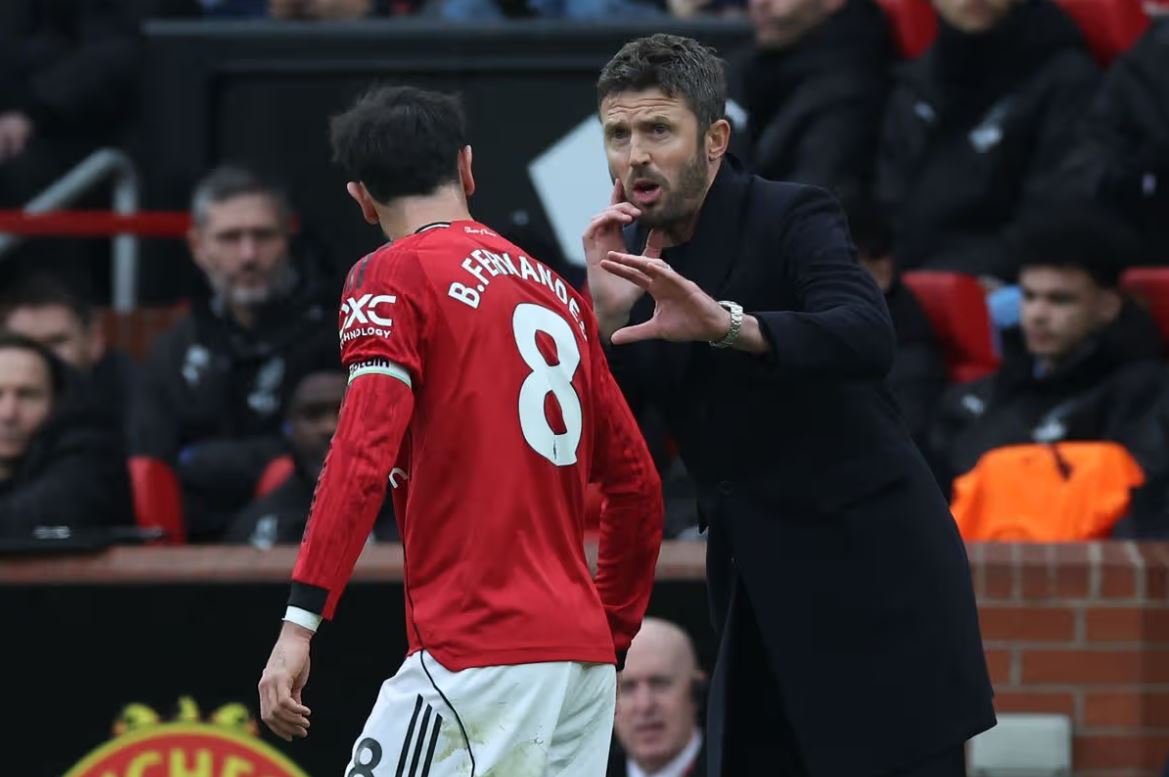
As captain, best player, and central figure in the team, his importance is undeniable. United rely heavily on his creativity, leadership, and presence. Naturally, the club would want to retain a player of that influence.
But there is a deeper question beneath that.
Bruno has already spent six years at a club that, by the standards it once set, has fallen short.
So when he speaks about wanting United to be “competitive”, it is fair to ask what that means to him.
If the benchmark is what we have seen so far — a distant second-place finish, sporadic cup success, and inconsistent European performances — then staying would not represent a shift. It would represent continuity.
If, however, his expectation is higher, if “competitive” means genuine title challenges and consistent presence at the top level, then this summer becomes a defining moment.
Not just for the club, but for the skipper as well.
The upcoming transfer window was already critical. Now, it carries added weight.
It will not just reveal what Manchester United believe is required to compete.
It will show what they are willing to do to get there.
And perhaps more importantly, it will reveal whether everyone involved shares the same definition of what “competitive” actually means.
If top 4 finishes and occasional trophies are enough, then the standard has already shifted.
And if that is the case, then the real issue is not that United are failing to compete. It is that they may no longer recognise what competing truly looks like.