


This isn’t because it’s a bad idea in general, but for what this United side needs in terms of structure, the false 9 just doesn’t really work anymore.
This team needs a focal point.
Early on, Carrick leaned into the false 9. Mbeumo, and at times Cunha, were used as the main men up top, with Sesko coming off the bench.
And for a short spell, it did work.
Mbeumo scored in three of the first four games in that role. Cunha came on as a sub as the striker and delivered in big moments against City and Arsenal. Sesko, as an impact option, was scoring regularly too.
On the surface, it looked like a system that had found balance.
But that’s the thing. It worked in moments. Not as a structure.
The more you watch this team, the clearer it becomes that they don’t actually play like a false 9 side.
They are direct. They go long. A lot.
United have played 1778 [Statmuse] long balls this season, more than every other top 10 side apart from Bournemouth. That’s not a minor detail. That’s a clear indication of how they are trying to progress the ball.
And if that’s your approach, then the profile of your striker matters.
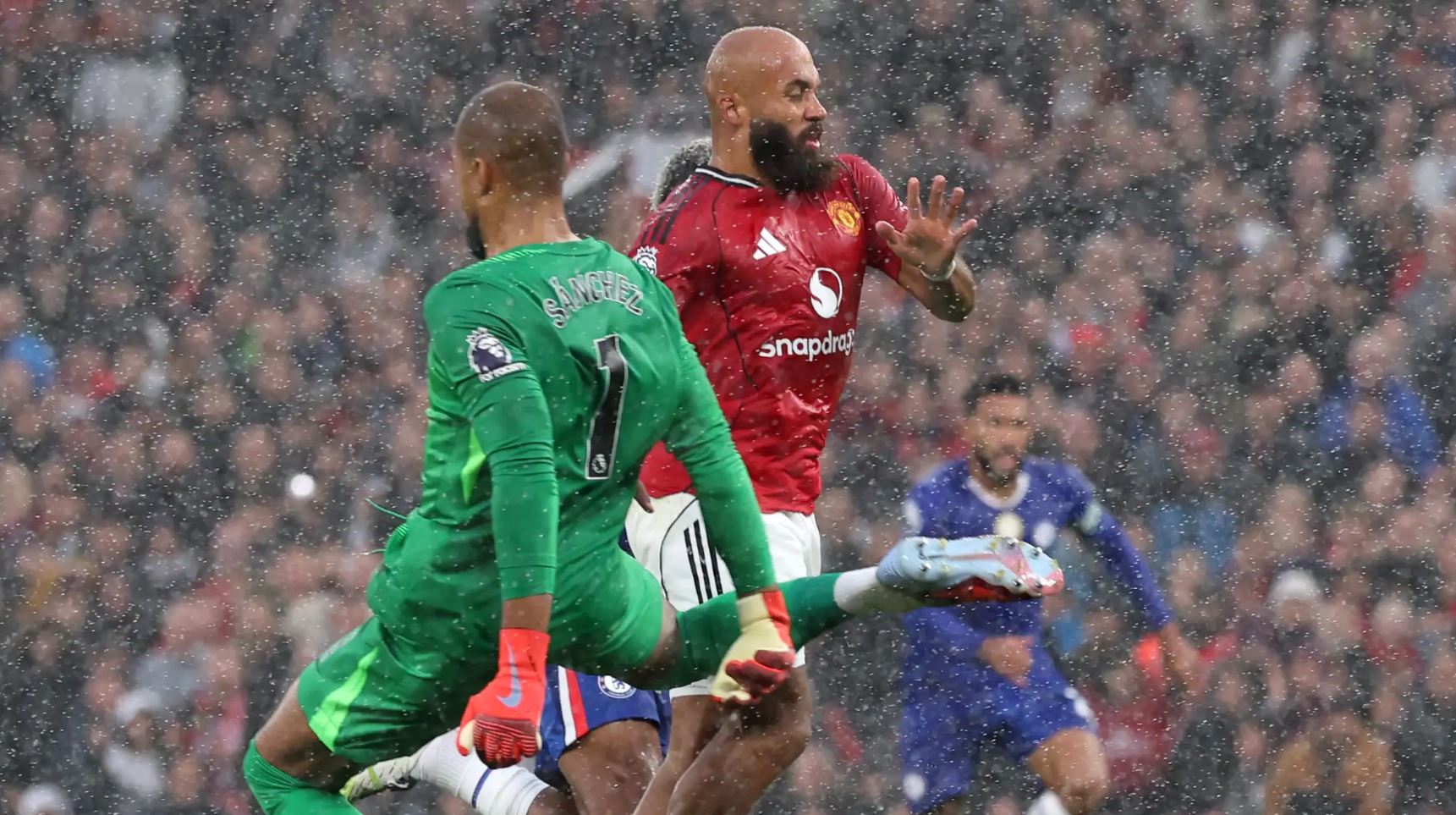
You cannot consistently go long and expect a false 9, someone without real aerial presence or physicality, to make those situations work. Those passes become low-percentage and more often than not, you are just handing possession back.
Which is exactly what starts to happen.
It’s not just about winning the first ball either. It’s what comes after.
Second balls are a huge part of this style. They are often the difference between sustaining an attack and immediately defending again. Without a striker who can properly contest aerial duels, United are not set up to compete for those second phases.
We’ve seen games where that becomes a problem.
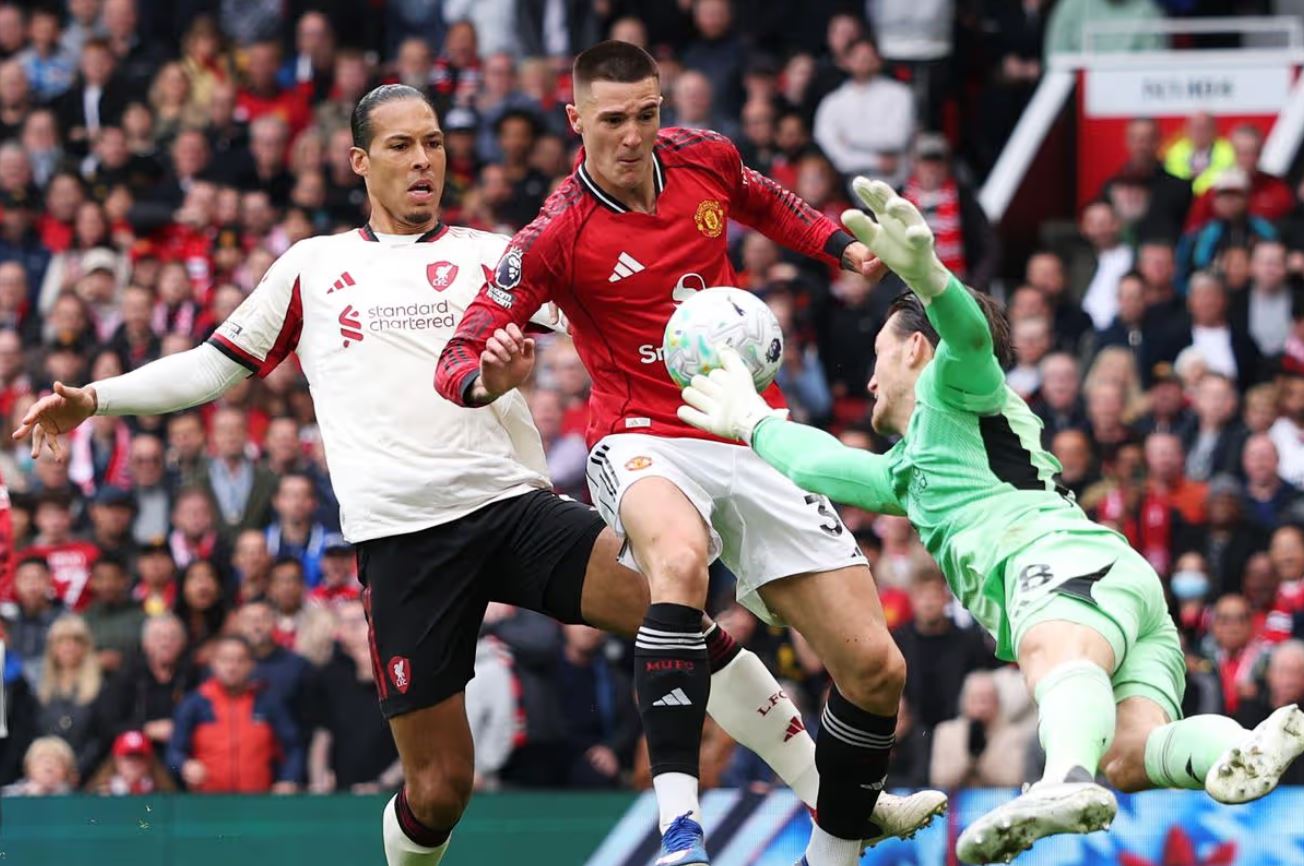
Against Liverpool, for large parts of that second half, United were second best to almost every loose ball. That gave Liverpool control, momentum, and confidence. United, on the other hand, were pushed deeper and deeper.
That’s not just a technical issue. It affects the entire flow of the game.
Then you look at the counter-attacking side of things.
This team is built to transition quickly, but even that starts to break down without a central reference point. Too much of the responsibility falls on players like Mbeumo and Cunha.
They are expected to run in behind, receive under pressure, carry the ball forward, create chances, and finish them. All while playing out of position.
That is not sustainable.
And when his form dips, as it has in the case of Mbeumo, the entire attacking structure starts to look disjointed.
Even when you go back to the Cameroonian's early goals, the picture is not as straightforward as it first appears.
Only one of those goals came from a genuine counter-attacking situation. The others came from set pieces or opposition mistakes. They were moments, not repeatable patterns that the system consistently produces.
Which is the key point.
The false 9 setup might give you output in short bursts, but it does not give this team a reliable platform to build from.
Sesko does.
Even when he is not scoring, he changes the way the team functions.
He gives United a presence up top. Someone who can occupy centre-backs, compete aerially, and hold the ball up. That alone makes a difference when you are playing as direct as United do.
Those long balls start to have purpose. There is a target. There is a chance to win the first contact or at least disrupt the defender enough to create a second phase.
It also improves the structure around him.
Cunha can operate closer to where he is most effective. Mbeumo can play off the striker instead of being asked to lead the line and do everything himself.
The roles start to make more sense.
It also helps United manage games better.
When under pressure, having a striker who can hold the ball, win fouls and bring others into play allows the team to move up the pitch. It relieves pressure and slows the game down when needed all the while frustrating opponents.
Without that, attacks break down quickly and the ball keeps coming back.
There is also the issue of predictability.
With a false 9 in this setup, the attack becomes heavily reliant on runs in behind. If the opposition can deal with that, there are fewer alternative routes to goal.
Centre-backs are not being pinned. They are not being forced into physical duels. They are not being asked to constantly make difficult decisions.
A striker changes that dynamic.
He provides variety. He can receive to feet, go aerial, link play, and create space for others. That makes the attack less predictable and more difficult to defend.
It also brings clarity in transition.
With a striker, the decision-making becomes simpler. There is a clear outlet, and the team can play forward with purpose. Without one, those moments can become uncertain and easier to stop.
Carrick’s average possession sits at 49.2%, which further reflects the kind of team United currently are. They are not dominating the ball. They are playing in phases, often without sustained control.
In that kind of system, structure becomes even more important.
And right now, the false 9 does not provide enough of it.
Ultimately, this is not about dismissing the false 9 as a concept. It has worked at the highest level and will continue to do so in the right context.
But systems are only effective when they align with the players and the style of play.
This United side is direct, transitional, and willing to go long. The numbers support that and the performances reflect it. Trying to force a false 9 into that setup creates a disconnect between intention and execution.
Too many attacks rely on individual moments. Too many phases of play break down too easily. Too much responsibility is placed on players who are not naturally suited to those roles.
With a striker, those issues begin to resolve.
The team has a reference point. Attacks have direction. Possession, even in shorter spells, has more purpose. Players operate in roles that complement each other instead of overlapping responsibility.
And that is the difference.
This is not just about adding goals.
It is about making the entire system make sense.
Benjamin Sesko | Image via Manchester United official X (@ManUtd)